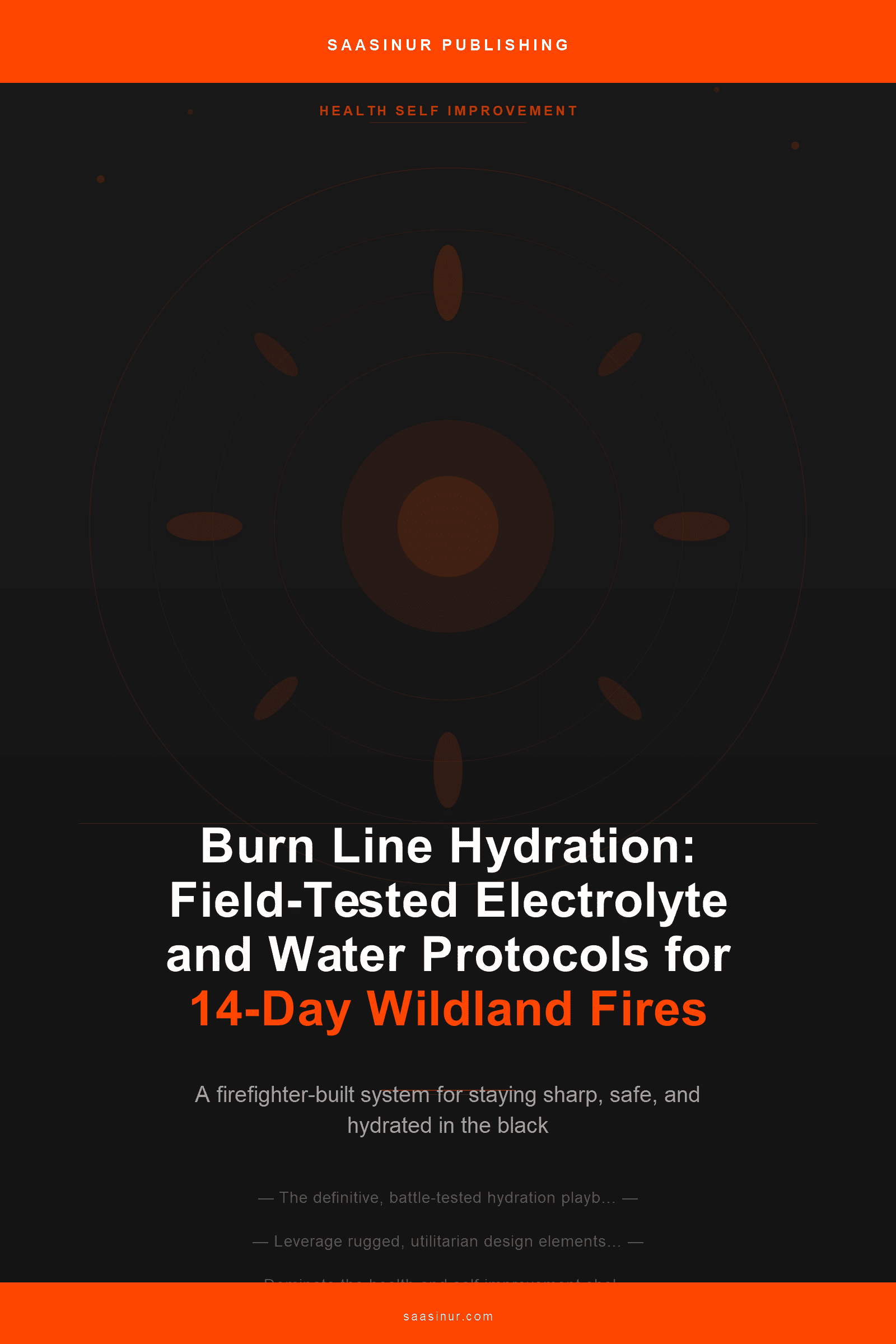

Stay Alive in the Black: Firefighter-Backed Hydration Guide
Built by Firefighters, For Firefighters
Burn Line Hydration is the only field-tested system written by wildland firefighters who’ve spent 14-day shifts in the black. This isn’t theory—it’s the exact hydration and electrolyte protocol used by crews on the front lines of America’s most brutal wildfires.
Why Hydration Fails in the Field
Most hydration advice is written for athletes or office workers. It ignores the realities of wildland firefighting: ash-clogged water sources, 16-hour shifts in 110°F heat, and no resupply for days. Dehydration doesn’t just slow you down—it kills situational awareness, increases injury risk, and turns a bad shift into a fatal one.
This book fixes that. It’s a step-by-step system for:
- Calculating exact water needs based on temperature, workload, and body weight
- Balancing electrolytes without relying on sugary sports drinks
- Purifying water from streams, stock tanks, and fire camp supplies
- Recognizing early signs of heat exhaustion before it escalates
- Packing lightweight, high-efficiency hydration gear for remote ops
Field-Tested Protocols for 14-Day Deployments
The core of the book is the Burn Line Hydration Matrix, a simple one-page reference that tells you exactly how much water and electrolytes to consume per hour, based on:
- Ambient temperature (from 80°F to 120°F+)
- Work intensity (light mop-up to extreme initial attack)
- Body weight (150 lbs to 250+ lbs)
- Acclimatization status (first day vs. day 10)
No guesswork. No overhydration. No cramps. Just the numbers that keep you sharp when it matters most.
Water Purification: Drink Safely from Any Source
When your only water source is a stagnant stock tank or a creek downstream from a burn scar, you need to know how to make it safe. This book covers:
- Field-expedient filtration (bandanas, socks, and improvised filters)
- Chemical treatment (chlorine dioxide, iodine, and bleach ratios)
- Boiling times for turbid water
- How to test water for contaminants without a lab
You’ll also learn how to store water for long shifts, prevent bacterial growth in hydration bladders, and avoid the “fire camp plague” that knocks out entire crews.
Gear That Works When You’re Miles from the Truck
Not all hydration gear is created equal. This book breaks down the best (and worst) options for:
- Hydration packs (durability, capacity, and ease of cleaning)
- Electrolyte tablets and powders (sodium/potassium ratios, taste, and solubility)
- Water purification (pumps, UV pens, and gravity filters)
- Insulated bottles and coolers for hot environments
Includes a gear checklist for 14-day deployments, so you never forget the one thing that could save your life.
Real Stories from the Black
“Day 12 on the Ferguson Fire. 108°F in the shade. My sawyer started cramping—bad. We followed the Burn Line protocol, and within 30 minutes, he was back on the line. That system kept our crew sharp when others were dropping.”
—Captain Mike R., USFS Engine Boss
This book is packed with firsthand accounts from firefighters who’ve used these protocols on fires like the Camp Fire, Thomas Fire, and Mendocino Complex. Their lessons—hard-earned in the worst conditions—could save your life.
Who This Book Is For
If you’re a wildland firefighter, hotshot, smokejumper, or prescribed burn crew member, this book is for you. It’s also essential for:
- Incident Commanders managing hydration for large crews
- Fire academy instructors teaching survival skills
- Search and rescue teams operating in extreme heat
- Military personnel in arid environments
Even if you’re not a firefighter, the protocols in this book will help anyone working in remote, high-heat environments—from ranchers to trail crews to disaster responders.
Your Life Depends on This
Hydration isn’t just about comfort. On a wildfire, it’s the difference between making it home and becoming a statistic. Burn Line Hydration gives you the tools to stay sharp, safe, and hydrated—no matter how long the shift or how hot the fire.
Don’t go into the black without it.