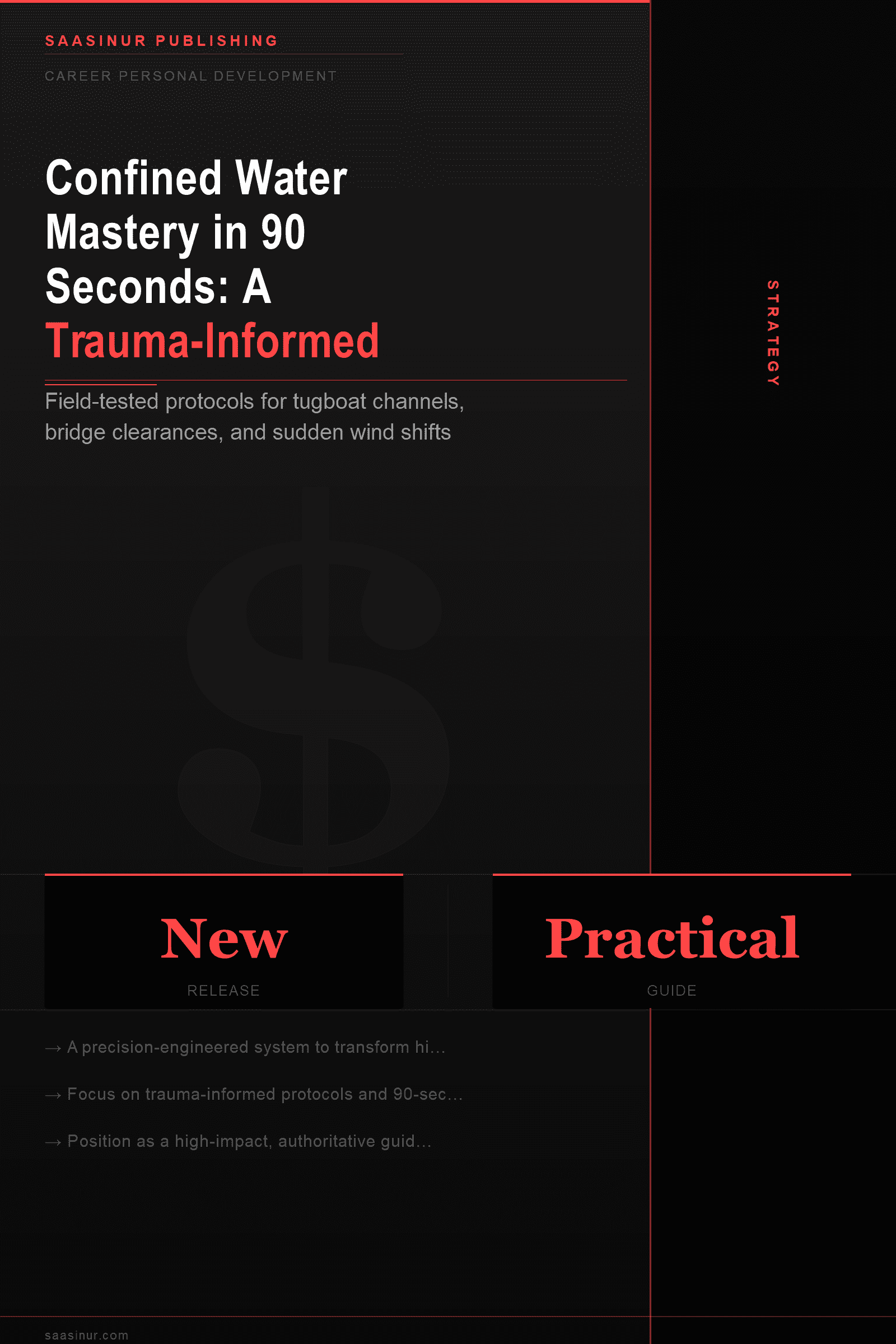

Confined Water Mastery in 90 Seconds: A New Standard for Harbor Pilots
What This Book Does for You
Every harbor pilot knows the pressure: a single misjudgment can cost millions in damages, delay global supply chains, or worse. Confined Water Mastery in 90 Seconds delivers a trauma-informed system that transforms uncertainty into confidence. This isn’t theory—it’s a field-tested playbook used by harbor pilots in Rotterdam, Singapore, and New York. Whether you’re navigating tugboat channels, calculating bridge clearances, or responding to sudden wind shifts, this book gives you the protocols to act decisively in under 90 seconds.
The 90-Second Protocol: How It Works
The system is built around three core pillars: situational awareness, decision-making speed, and stress resilience.
1. Situational Awareness: Learn to read confined waters like a map. We break down visual cues—from tide lines to vessel wake patterns—that reveal hidden risks before they manifest. Chapter 2 includes annotated diagrams of high-risk zones in Rotterdam’s Maasvlakte, showing how to spot trouble before it starts.
2. Decision-Making Speed: Your brain under pressure isn’t a computer—it’s a survival mechanism. This book teaches you how to leverage cognitive shortcuts and muscle memory to make critical calls faster without sacrificing safety. Real-world case studies from the Port of Los Angeles demonstrate how pilots shaved precious seconds off their response times during sudden wind shifts.
3. Stress Resilience: Confined waters trigger adrenaline spikes. Our trauma-informed approach helps you recognize and manage stress responses, ensuring clarity when it matters most. Interactive exercises in Appendix A guide you through controlled breathing and mental rehearsal techniques used by elite performers in high-stakes environments.
Why 90 Seconds?
The 90-second window is your margin of error in confined waters. It’s the time between noticing a problem and acting on it. This book teaches you to compress decision-making into that window by:
- Standardizing protocols: Pre-approved scripts for common scenarios (e.g., tugboat malfunctions, bridge clearance miscalculations).
- Prioritizing risks: A visual risk matrix to quickly identify which threats demand immediate attention.
- Leveraging technology: How to integrate AIS data, radar feeds, and VTS communications into your workflow without overload.
What You’ll Find Inside
- Chapter 1: The Psychology of Confined Waters – How stress hijacks your decision-making and how to outsmart it.
- Chapter 2: Reading the Water – Decoding currents, tides, and vessel behavior in tight spaces.
- Chapter 3: Tugboat Protocols – Step-by-step guides for towing operations in congested channels.
- Chapter 4: Bridge Clearance Strategies – Calculating safe passage under low-clearance bridges in dynamic conditions.
- Chapter 5: Wind Shift Scenarios – Real-time adjustments for sudden changes in wind direction and speed.
- Appendix A: Stress Management Toolkit – Breathing exercises, mental rehearsal scripts, and recovery techniques.
- Appendix B: Quick-Reference Cards – Laminated guides for on-the-water use.
A Note on Trauma-Informed Design
This book isn’t just about navigation—it’s about survival. We’ve designed it to minimize cognitive load and avoid triggering past trauma responses. Visual layouts, clear hierarchies, and repetition-free language ensure the content is accessible even under extreme stress. The protocols are battle-tested by pilots who’ve experienced near-misses, giving you the confidence to navigate your next challenge.
"This isn’t just another navigation manual. It’s a lifeline. The 90-second protocols saved my vessel during a sudden wind shift in the Maasvlakte. I had seconds to decide—this book gave me the clarity to act."
Who Should Read This
This book is for:
- Harbor Pilots: Seasoned professionals looking to refine their edge in high-stakes environments.
- Tugboat Captains: Crew members who need to coordinate with pilots in confined spaces.
- VTS Operators: Shore-based teams who want to better support pilots in real time.
- Maritime Trainees: New pilots preparing for their first assignments in complex ports.
- Safety Officers: Professionals tasked with reducing incident rates in confined waters.
How to Use This Book
This isn’t a book to read once—it’s a system to integrate. Start with the foundational chapters (1–3) to build your mental models. Then, use the scenario-based chapters (4–5) for targeted practice. Keep the quick-reference cards in your bridge or tugboat for on-the-spot guidance. Treat it like a playbook: revisit protocols regularly, and drill them until they become second nature.