
Launch Your Basement Winery—Legally & Affordably
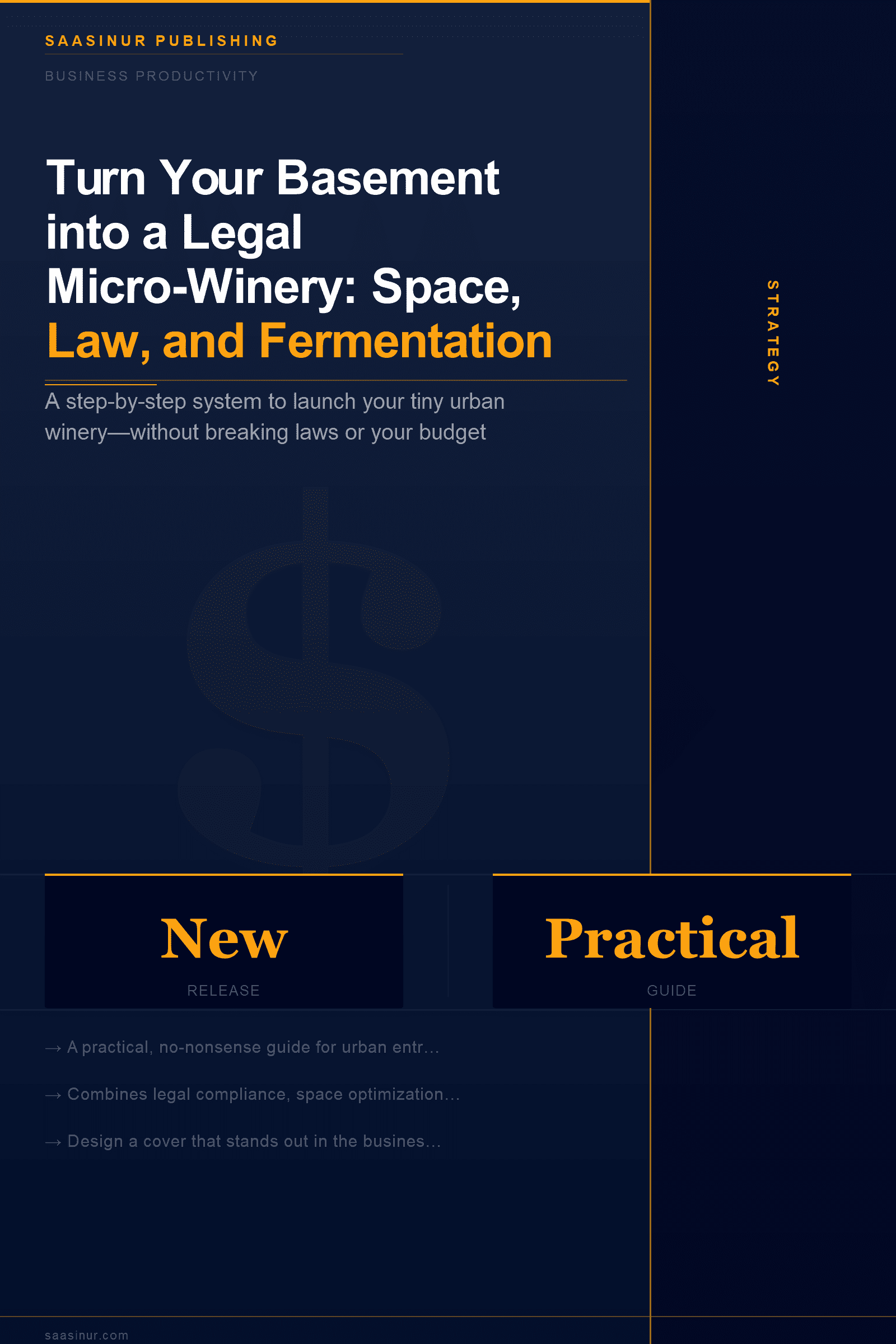
Turn Your Basement into a Legal Micro-Winery
Urban living doesn’t mean giving up on your winemaking dreams. With the right knowledge, you can transform a corner of your basement into a fully compliant micro-winery that produces high-quality wine without breaking the law or your budget. This guide is your roadmap to navigating the complex intersection of home fermentation, zoning laws, and small-batch winemaking, all while keeping your operation discreet and cost-effective.
Why a Basement Winery?
Basements are the unsung heroes of urban winemaking. They offer controlled temperatures, privacy, and the space needed to ferment and age wine without disturbing your daily life. However, turning this space into a winery isn’t as simple as stacking barrels and hoping for the best. You need to understand local regulations, optimize your fermentation process, and design your space efficiently to avoid costly mistakes. This book breaks down every step—from legal compliance to fermentation hacks—so you can start producing wine with confidence.
The Legal Landscape: Staying Compliant While Brewing
One of the biggest hurdles for basement winemakers is navigating the legal requirements. Home winemaking laws vary by country, state, and even city, but this guide simplifies the process by providing a clear, step-by-step breakdown of what you can and cannot do. You’ll learn:
- Permits and Licenses: Which licenses you need (or don’t need) depending on your location and production volume.
- Zoning Laws: How to ensure your basement winery doesn’t violate local zoning ordinances.
- Tax Implications: What taxes apply to home winemakers and how to report your production accurately.
- Record-Keeping: The essential documentation you must maintain to stay on the right side of the law.
This section also includes real-world examples of how others have successfully launched micro-wineries in urban areas, so you can avoid common pitfalls and focus on what matters—making great wine.
Space Optimization: Making the Most of Your Basement
Basements aren’t always spacious, but with smart planning, you can turn even the smallest area into an efficient winery. This book covers:
- Layout Design: How to arrange fermentation tanks, aging barrels, and storage to maximize space and workflow.
- Ventilation and Temperature Control: Keeping your basement at the ideal temperature for fermentation without relying on expensive HVAC systems.
- Lighting and Safety: Ensuring your workspace is well-lit, safe, and free from hazards like mold or pests.
- Modular Solutions: Affordable and flexible setups that grow with your production needs.
Whether you’re working with a 10x10 foot area or a larger basement, these tips will help you create a functional and compliant winery.
Fermentation Hacks for Urban Winemakers
Fermentation is where the magic happens, but it’s also where many beginners run into problems. This guide shares tried-and-true fermentation hacks to help you achieve consistent, high-quality results:
- Yeast Selection: Choosing the right yeast strains for your grape variety and climate.
- Temperature Management: Techniques to maintain the perfect fermentation temperature, even in a basement with fluctuating temperatures.
- Sanitation Best Practices: How to keep your equipment clean and your wine free from contamination.
- Batch Sizing: Determining the right batch size for your space and goals.
- Troubleshooting Common Issues: Solutions for problems like stuck fermentation, off-flavors, and cloudy wine.
These hacks are designed to save you time, money, and frustration while helping you produce wine that rivals commercial labels.
From Setup to Bottling: A Step-by-Step System
This book isn’t just a collection of tips—it’s a complete system for launching your basement winery. Follow the step-by-step instructions to:
- Assess Your Space: Evaluate your basement’s potential and identify necessary modifications.
- Secure Permits: Navigate the legal requirements and obtain the necessary licenses.
- Design Your Winery: Plan your layout, equipment, and workflow for maximum efficiency.
- Source Supplies: Find affordable, high-quality equipment and ingredients without overspending.
- Start Fermenting: Begin your first batch with confidence, knowing you’re following best practices.
- Age and Bottle: Monitor your wine’s progress and prepare for bottling day.
By the end of this process, you’ll have a fully functional micro-winery in your basement, ready to produce wine that impresses friends, family, and even local wine enthusiasts.
What Others Are Saying
"This book is a game-changer for anyone dreaming of making wine at home. The legal section alone saved me from a potential fine—I didn’t even know I needed a license! The fermentation hacks are practical and easy to follow, and the space optimization tips helped me turn my cluttered basement into a slick winery. Highly recommend!"
— Michael T., Urban Winemaker
"I’ve read a lot of home winemaking books, but none addressed the unique challenges of urban living like this one. The step-by-step system is foolproof, and the legal advice is up-to-date. My first batch turned out fantastic, and I owe it all to this guide."
— Sarah L., First-Time Winemaker
Start Your Basement Winery Today
Whether you’re a seasoned homebrewer looking to expand into winemaking or a complete beginner eager to turn your hobby into a passion, Turn Your Basement into a Legal Micro-Winery is your essential companion. With this guide, you’ll have everything you need to launch a compliant, efficient, and rewarding winemaking operation—no matter how small your space.
Stop dreaming about your basement winery and start building it today. Your future favorite bottle of wine is just a few fermentations away.