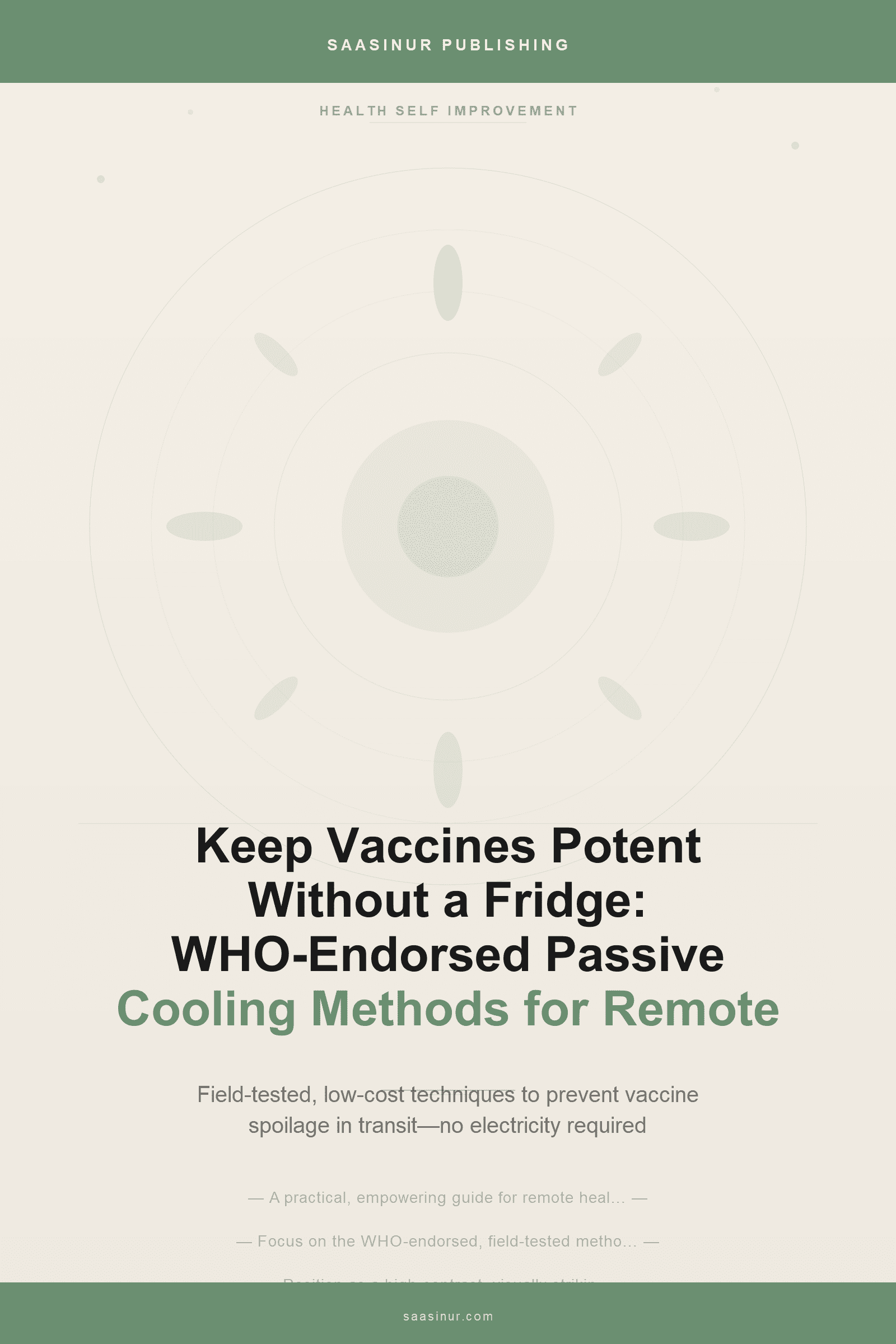

Keep Vaccines Potent Without a Fridge: WHO-Approved Passive Cooling
Keep Vaccines Potent Without a Fridge
Field-tested, low-cost techniques to prevent vaccine spoilage in transit—no electricity required.
For remote health workers, maintaining the cold chain is a constant challenge. Without reliable electricity, even a brief exposure to heat can render vaccines useless, wasting precious resources and putting lives at risk. This practical guide reveals WHO-endorsed passive cooling methods that require no refrigeration, no complex equipment, and no prior expertise—just simple, effective techniques proven in the field.
Why This Book Matters
Every year, millions of vaccine doses are lost due to breaks in the cold chain, particularly in off-grid and underserved regions. Traditional cooling solutions like refrigerators or generators are often unavailable, expensive, or impractical. This book provides an alternative: reliable, low-cost, and sustainable methods to keep vaccines potent during transport, even in the harshest conditions.
Written for health workers, logistics teams, and field coordinators, it distills decades of WHO research and field experience into actionable steps. Whether you're delivering vaccines to a rural clinic, a refugee camp, or a disaster zone, these techniques ensure that every dose arrives safe and effective.
What You’ll Learn
Inside this guide, you’ll find:
- Proven Passive Cooling Methods: Learn how to use evaporative cooling, phase-change materials, and insulated containers to maintain temperatures within WHO’s recommended range (2°C to 8°C).
- Step-by-Step Instructions: Detailed, easy-to-follow procedures for packing, transporting, and monitoring vaccines without electricity.
- Field-Tested Solutions: Real-world examples from health workers in Africa, Asia, and Latin America who’ve successfully implemented these methods in their programs.
- Troubleshooting Tips: Identify common pitfalls and how to avoid them, ensuring your vaccines stay potent from point of dispatch to administration.
- Cost-Effective Strategies: Low-tech, high-impact solutions that require minimal investment but deliver maximum reliability.
Key Topics Covered
- Understanding the cold chain and why passive cooling works
- Selecting the right insulated containers and materials
- Using phase-change materials (PCMs) for temperature stability
- Evaporative cooling techniques for hot, dry climates
- Packing and loading vaccines for maximum efficiency
- Monitoring temperature without electricity
- Handling emergencies and unexpected delays
- Case studies from remote health programs worldwide
The Science Behind Passive Cooling
Passive cooling relies on natural processes—like evaporation, insulation, and heat absorption—to maintain low temperatures without power. The World Health Organization has rigorously tested and endorsed these methods because they’re scalable, affordable, and adaptable to diverse environments. This book breaks down the science into simple terms, so you can trust that these techniques will work for your specific needs.
For example, evaporative coolers use water to lower temperatures, making them ideal for arid regions. Phase-change materials absorb heat as they melt, keeping vaccines cool for hours or even days. Insulated containers, like vaccine carriers or cold boxes, provide an extra layer of protection when combined with these methods.
Who Should Read This Book?
This guide is essential for:
- Remote Health Workers: Nurses, midwives, and community health workers who transport vaccines to rural clinics.
- Logistics Teams: Program managers and coordinators responsible for vaccine distribution in off-grid areas.
- NGO and Aid Workers: Staff working in refugee camps, disaster zones, or underserved communities.
- Government Health Officials: Policymakers and regulators looking to improve cold chain resilience.
- Emergency Responders: Teams deployed to areas where infrastructure is compromised.
What Others Are Saying
"This book is a game-changer for our vaccine delivery programs. The passive cooling methods have saved us thousands in lost doses and ensured that every child in our region receives the protection they need."
— Dr. Amina Okafor, Immunization Program Manager, Nigeria
"Simple, practical, and lifesaving. The step-by-step guides make it easy to implement these techniques even in the most remote locations."
— Carlos Mendoza, Logistics Coordinator, Médecins Sans Frontières
Why Choose This Book Over Others?
Unlike generic guides on cold chain management, this book focuses exclusively on passive cooling—the only viable solution for areas without electricity. It’s:
- WHO-Endorsed: Methods are directly aligned with global health standards.
- Field-Tested: Proven in real-world conditions by health workers worldwide.
- Low-Cost: Uses affordable, locally available materials where possible.
- No Prerequisites: No need for advanced training or equipment—just follow the steps.
Most cold chain guides assume access to electricity or refrigeration. This book doesn’t. It’s your go-to resource for keeping vaccines potent anywhere, anytime.
Take Action Today
Don’t let broken cold chains undermine your efforts. Equip yourself with the knowledge to transport vaccines safely, no matter where you work. Whether you’re a seasoned health worker or new to the field, this guide will give you the confidence to deliver life-saving vaccines—every time.
Order your copy now and ensure no vaccine is wasted due to a preventable break in the cold chain.